
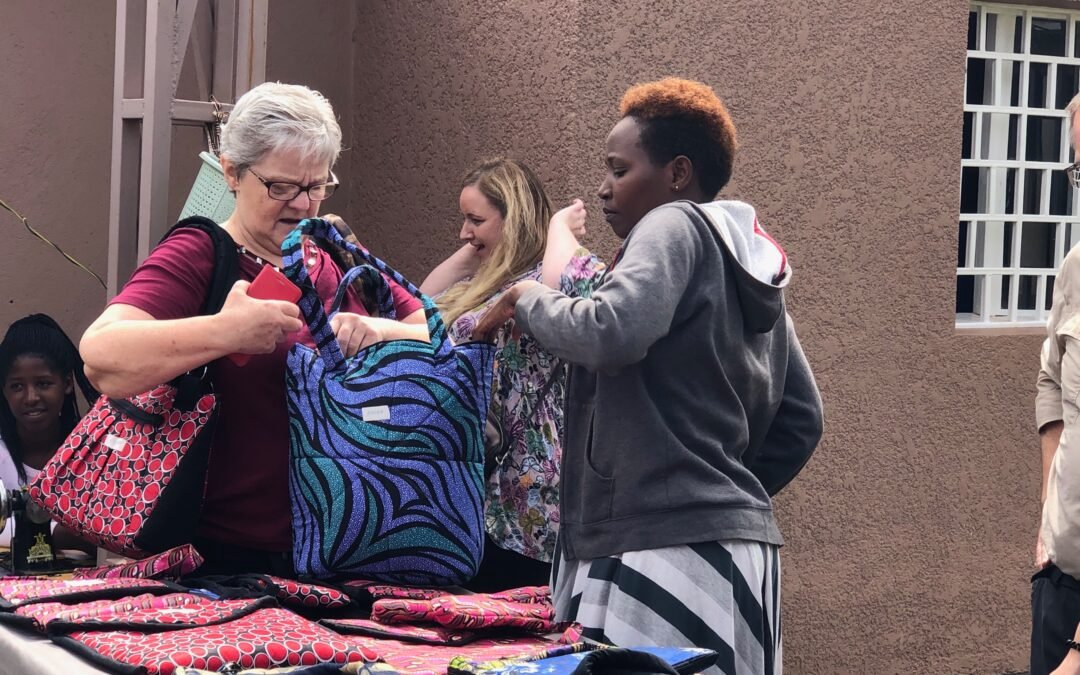
Kabuga Sewing Cooperative, Rwanda.
It began with mothers who wanted more than help. It began with mothers who wanted work.
The women of Kabuga were part of our child sponsorship program. Their children were in school, fed, and cared for, and for that they were grateful. But these mothers had other children too, and they knew something that every parent knows deep in their bones: a sponsored child is a blessing, but a working mother changes the story for every child in the house.
So they came to us with a request that stopped us in our tracks. They did not ask for more sponsorship. They asked for sewing machines.
Seven Wells bought the machines and paid for a teacher. The women learned to sew, stitch by stitch, seam by seam, in a small room in Kabuga. Some of them had never held a needle professionally in their lives. They practiced until their hands knew the work without thinking.
Then they did what empowered people do. They organized. The women formed a sewing cooperative, and the orders began to come. Schools contracted them to make uniforms. Businesses hired them to tailor professional attire. The machines that started as a gift became the engine of an enterprise.
Today the cooperative is 40 women strong. It runs a profitable tailoring shop, and the women who once learned to sew now teach. They opened a sewing school for young girls who cannot continue their formal education, girls who might otherwise have nothing, handing them the same skill that changed their own lives.
The mothers who asked for machines instead of money became one of the earliest inspirations for our Family Empowerment model. They showed us what we now know to be true everywhere we work: families do not need rescue. They need a starting point.
Pictured: members of our Canadian mission team with Alice, our Rwanda project manager, buying handmade bags from the women of the cooperative. Every bag carries a story of a mother who refused to wait for change, and decided to sew it herself.